How to Prepare and Deliver Lessons that "Cause Students to Learn"
"If the students do not learn, then the teacher has not taught."
True learning consists of more than just hearing and being able to repeat the information that the teacher has presented. True learning involves eight distinct student responses. As teachers, we need to endeavor to evoke each of these eight responses from the students.
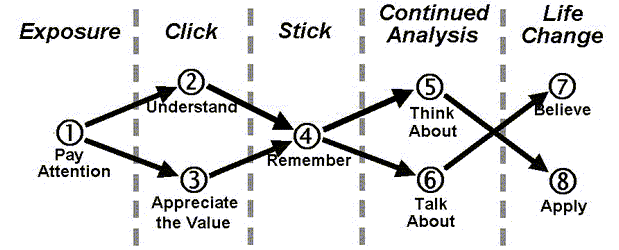
The first one relates to their exposure to the lesson. They hear it (listening). The next two relate to their receptivity to the lesson. It clicks in both their heads (understanding) and their hearts (valuing). When they remember it (the fourth one) it sticks – remaining long enough to stimulate change. The next two deal with their continuing analysis of what they have heard as they ponder its ramifications (thinking) and discuss their ideas with others (talking). The last two are when it produces changes in their lives – both their beliefs (confidence) and their actions (skills).
There are many things that a teacher can do to evoke these eight responses. The following is just a sample. Click here for a chart that shows a fuller listing.
1. Pay Attention
When teaching, we want our students sitting on the edges of their seats, paying close attention to every word that we say. We do not want them bored. We do not want their minds to be wandering. Our lessons should, therefore, be interesting - not boring. We can stimulate their interest by speaking with energy and passion. We can maintain their attention by telling stories, using visuals, asking questions, or showing them how the lesson addresses their interests.
2. Understand
When teaching, we want our students to comprehend the meaning of what is taught. We do not want them to walk away confused or having misunderstood the material. Our lessons should, therefore, be understandable - not confusing, disorganized or over their heads. We can help them understand by clearly organizing our material, providing complete explanations with vivid examples, and by simplifying complex ideas.
3. Appreciate the Value
When teaching, we want our students to recognize the value of what they are learning. We do not want them to treat it with casual indifference. Our lessons should, therefore, be relevant, not meaningless theory. We can make a lesson relevant by showing them its practical usefulness and importance. We can also testify of our own love for it.
4. Remember
When teaching, we want to plant the information deep into our students’ minds so it will become a permanent part of their collection of knowledge. We want them to remember what they hear. Our lessons should, therefore, be memorable - not easily forgotten. We can make the points memorable with repetition and illustrations. We can also link these new ideas to things that they already know.
5. Think about it
When teaching, we want our students to think carefully about what they are learning. We do not want empty words to be lodged into their minds without careful and thoughtful examination. Our lessons should, therefore, be thought-provoking. We can encourage them to think about its deeper implications by asking questions and seeking responses.
6. Talk about it
There is great value in verbally expressing what has been learned. Articulating the information can reinforce it in their memory, strengthen their confidence, and help their classmates as well. We want our students to speak the information and thereby experience these benefits. Our lessons should, therefore, be responsive - not just mere listening. We can encourage our students to speak with discussion questions, recitations, and regular review.
7. Believe it (Confidence)
When teaching, we want to help shape our students’ beliefs and help them develop a confidence in what they understand. Our lessons should, therefore, be convincing. We do this by speaking with confidence and by demonstrating that what we are teaching them actually works. We can anticipate questions or areas of difficulty and include material in our lesson plans that address those concerns.
8. Apply it (Skill Development)
When teaching, we want to help our students put what they learn into practice and develop important how-to skills. Our lessons should, therefore, be applicable - not limited to mere head knowledge. We can talk of concrete ways to apply the principles and demonstrate how-to skills. We can also share how this knowledge has impacted our own actions.
|